Liveness, Readiness, and Startup Probes
HTTP, TCP, exec, and gRPC probes; timing parameters; failure thresholds; common mistakes; and real-world gotchas.
A container process can be running without being healthy. A deadlocked web server holds its socket open, passes TCP checks, and serves zero requests. An application that lost its database connection keeps returning 500s. The container status says Running, but the workload is broken. Probes are how the kubelet tells the difference: liveness restarts broken containers, readiness gates traffic, and startup protects slow starters. Getting them right keeps workloads self-healing. Getting them wrong causes cascading restarts that make outages worse.
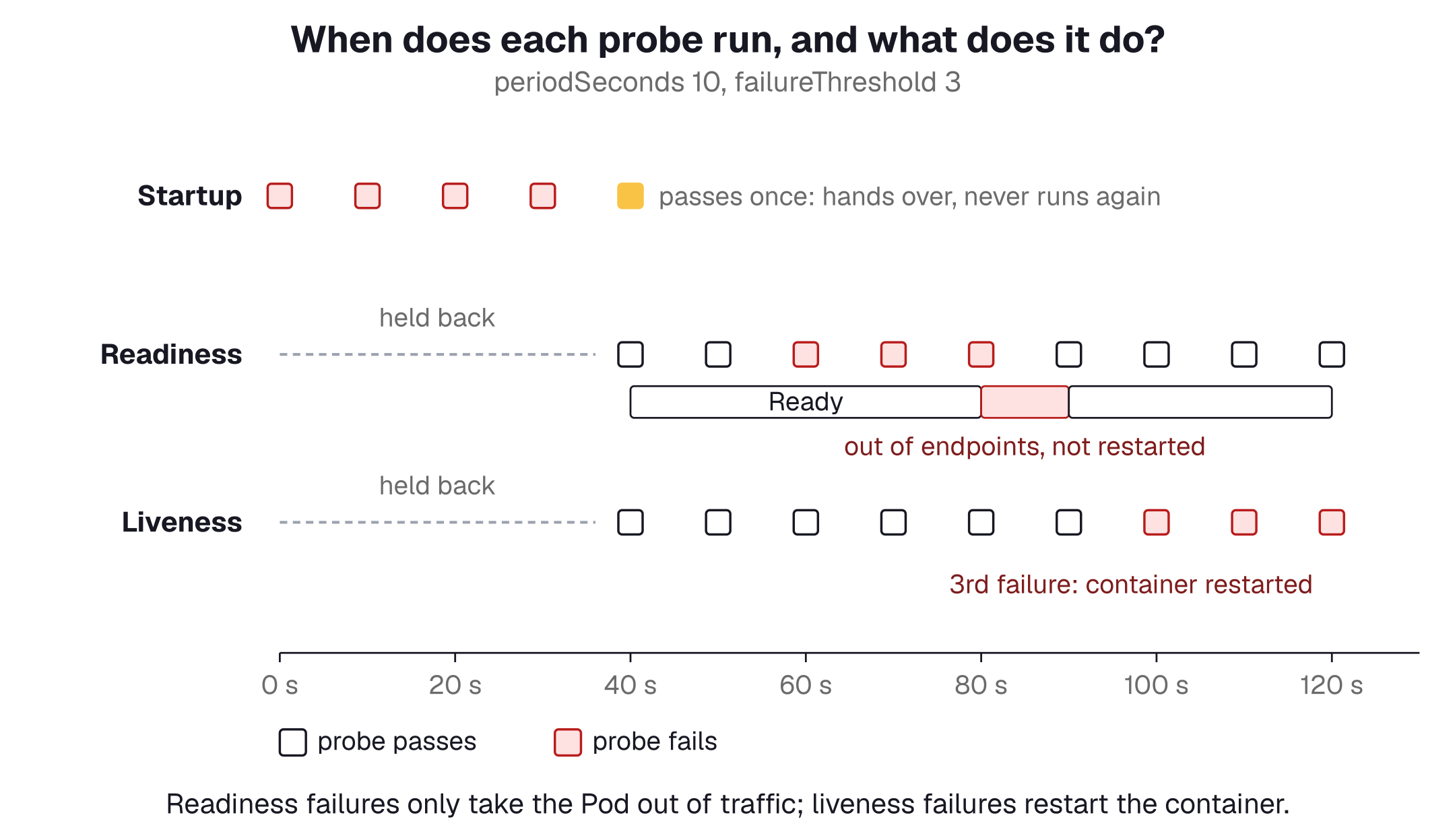
 Figure 1 — Probe lifecycle. The kubelet runs the startup probe first; once it succeeds, liveness and readiness run in parallel: readiness failures take the Pod out of traffic, liveness failures restart the container.
Enroll to read the rest of this lesson
Free. Your progress and certificate come with it.
Enroll, free